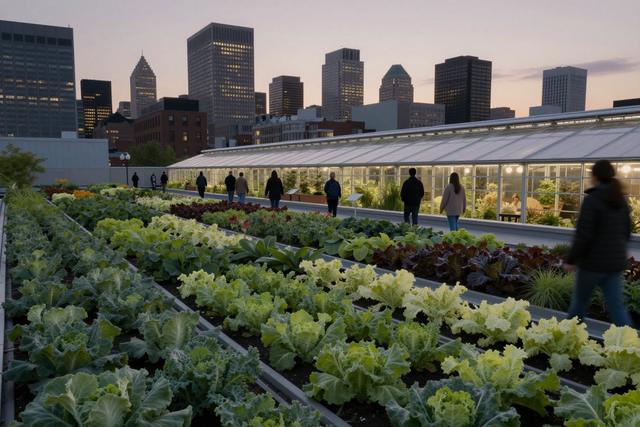
On September 13, 2026, a collective of Quebec farmers inaugurated a rooftop farm on the Palais des congrès in Montreal. The new urban garden, created by eleven participating farms, is now open to the public. Visitors are invited to see firsthand how food is cultivated in a city setting and to learn about the origins of the produce they buy.
The initiative aims to demonstrate the steps involved in growing vegetables, herbs and small fruit crops on a limited footprint. By allowing shoppers to observe planting, maintenance and harvest cycles, the farmers hope to encourage consumers to choose locally produced items over imported alternatives.
The timing of the opening coincides with an ongoing trade dispute between Quebec’s agricultural sector and the United States. The disagreement has created uncertainty in cross‑border markets, prompting producers to stress the importance of supporting home‑grown food. Organizers of the rooftop farm view the public showcase as a practical response to the economic pressure caused by the trade conflict.
The rooftop location at the Palais des congrès offers a visible platform in the heart of Montreal. The farm’s layout includes raised beds and a small irrigation system designed to operate within the constraints of the building’s roof. While the site is primarily educational, the growers also plan to supply a portion of the harvested produce to local markets and restaurants, reinforcing the message of a short, regional supply chain.
Officials from the participating farms emphasized that the project is part of a broader effort to strengthen Quebec’s food sovereignty. By providing a tangible example of urban agriculture, they aim to build consumer confidence in the quality and availability of Quebec‑grown products, even as trade negotiations continue to affect traditional agricultural exports.
The rooftop farm will remain accessible to the public for the remainder of the growing season, with scheduled tours and informational displays. Organizers hope that the visibility of the project will translate into lasting changes in purchasing habits, reinforcing local agriculture amid the current trade challenges.