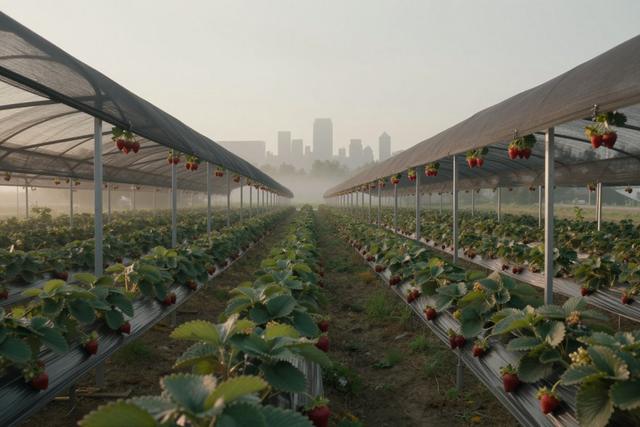
Quebec strawberry producers are preparing to move their harvest operations to off‑soil systems that use raised field shelters. The change is being driven by climate‑related challenges that have made traditional open‑field cultivation less reliable in recent years.
Rising temperatures and increasingly unpredictable weather patterns have created conditions that threaten the consistency of berry yields in the province’s conventional fields. Growers report that heat spikes, heavy rains and sudden frosts are occurring with greater frequency, complicating the timing of planting, flowering and fruit development.
In response, growers are adopting protected, soil‑free cultivation methods that rely on raised platforms or containers placed under shelter structures. These setups allow the plants to be grown above the ground, reducing exposure to soil‑borne diseases and providing a controlled environment that can mitigate the impact of extreme weather. The shelters are designed to shield the crops from excess heat, wind and precipitation while still permitting natural light.
The shift to off‑soil production represents a broader effort within Quebec’s agricultural sector to adapt to a warming climate. By moving away from open‑field practices, strawberry growers aim to preserve the quality and quantity of their harvests despite the environmental pressures they face. The new method is expected to become a more common feature of the province’s fruit‑growing landscape as climate trends continue to evolve.