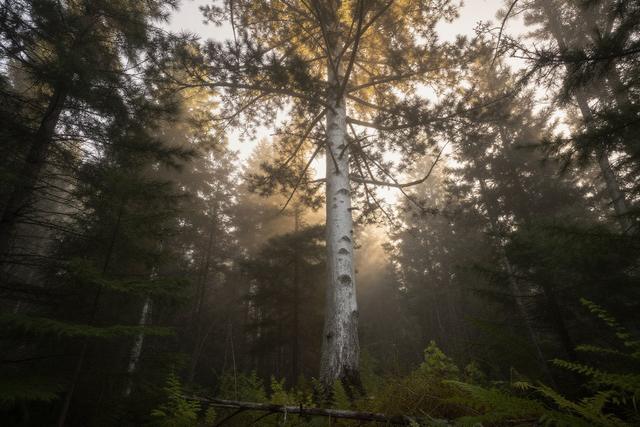
Scientists are conducting a focused study in Lanaudière to determine the precise age and exact site of what may be Quebec’s oldest white pine. The effort, announced early Saturday, aims to resolve longstanding uncertainty about which tree holds the province’s seniority among its many venerable pines.
The investigation forms part of a broader examination of Quebec’s forest heritage, where numerous white pines have survived for centuries. Researchers plan to apply established field techniques, including non‑destructive core sampling and growth‑ring analysis, to assess the tree’s lifespan without harming it. By comparing ring patterns with regional climate records, they hope to establish a reliable age estimate.
Locating the candidate tree in Lanaudière involves cross‑referencing historical maps, local knowledge, and satellite imagery. The region, known for its mixed woodlands and protected natural areas, contains several stands where ancient pines have been documented. Field teams will verify the presence of a mature specimen that matches the criteria for exceptional age.
Understanding the age of the oldest white pine carries ecological and cultural significance. White pines serve as keystone species, providing habitat for wildlife and contributing to forest stability. Their longevity also offers insights into past climate conditions and forest dynamics, valuable for current conservation planning.
The project aligns with provincial initiatives to catalog and protect Quebec’s natural monuments. Findings will be shared with environmental agencies and may influence management strategies for preserving ancient trees. While the exact outcome remains pending, the research underscores ongoing scientific interest in the province’s living heritage and the importance of accurate documentation of its oldest forest members.
The study is scheduled to continue through the coming months, with periodic updates expected as data are collected and analyzed.