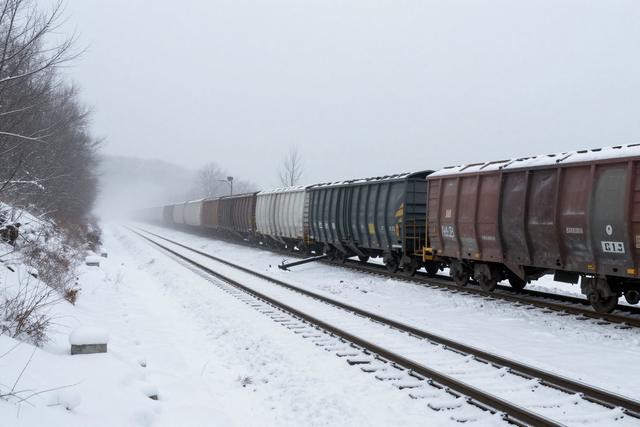
The Transportation Safety Board of Canada announced that it has been unable to determine a definitive cause for the freight train derailment that occurred in northern Quebec in December 2025. While the investigation considered a range of factors, the board highlighted rapid temperature fluctuations as a possible contributor, but stopped short of confirming any single reason for the incident.
The derailment, which involved a freight train carrying goods through a remote part of the province, prompted a standard inquiry by the board, which is tasked with examining transportation accidents across the country. Investigators examined the track conditions, mechanical components of the train, and environmental influences present at the time of the event. Their report noted that the region experienced notable swings in temperature in the days surrounding the accident, a condition that can affect rail integrity and equipment performance.
Despite the focus on temperature changes, the board’s findings did not identify a clear mechanical failure, human error, or track defect that could be directly linked to the derailment. The absence of a conclusive cause means that safety recommendations remain limited, as the board cannot pinpoint a specific corrective action. However, the report suggests that operators monitor extreme temperature variations more closely and consider additional safeguards in areas prone to such weather patterns.
The board’s statement underscores the challenges of investigating incidents in remote locations where evidence may be harder to collect. It also reflects the broader effort by Canadian transportation authorities to maintain rigorous safety standards for rail operations. The investigation remains open, and the board will continue to review any new information that could shed light on the factors that led to the December 2025 derailment.
The incident and the subsequent investigation serve as a reminder of the complexities involved in rail safety oversight, particularly in regions subject to harsh and variable climatic conditions.