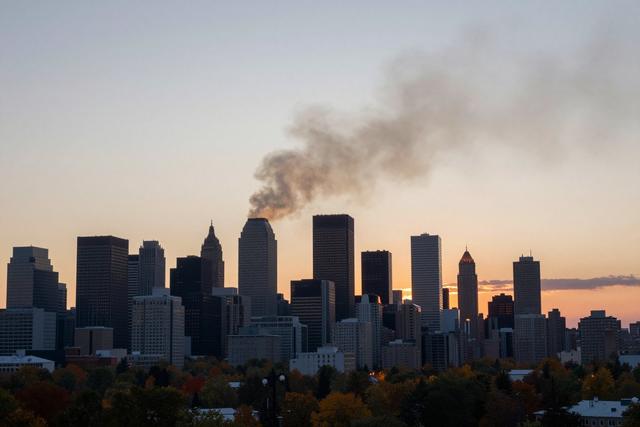
On Sunday, July 19, 2026, authorities forecast that the thick haze blanketing Quebec will begin to dissipate, even as Canada wrestles with a sharp rise in forest fire activity. Nationwide, the number of active blazes is approaching the 1,000‑fire mark, and recent counts show roughly 200 additional ignitions compared with the previous day.
The northern reaches of Ontario are bearing the brunt of the surge, with multiple hotspots reported across its forested terrain. Satellite imagery and ground crews confirm that the intensity of the fires in this region has intensified, contributing significantly to the overall national total. Smoke generated by these Ontario fires has been carried eastward by prevailing winds, creating a persistent smog that has lingered over parts of Quebec for several days.
Meteorologists monitoring the situation indicated that atmospheric conditions are shifting in a way that should allow the smoke plume to thin and eventually clear. The expected improvement is tied to a change in wind patterns and a gradual reduction in the volume of particulate matter suspended in the air. Residents of affected Quebec communities have been advised to remain aware of air quality updates as the situation evolves.
Fire management agencies across Canada continue to allocate resources to contain the growing number of incidents. While the exact cause of each new fire has not been disclosed, the rapid increase underscores the challenges faced by firefighting teams operating in remote and densely forested areas. The near‑1,000 active fire count reflects a cumulative tally that includes both newly reported blazes and those that have persisted from earlier in the season.
Officials emphasize that the forecasted clearing of smoke over Quebec does not signal an end to the broader wildfire threat. Ongoing monitoring and coordinated response efforts remain essential as the country works to bring the expanding list of forest fires under control.