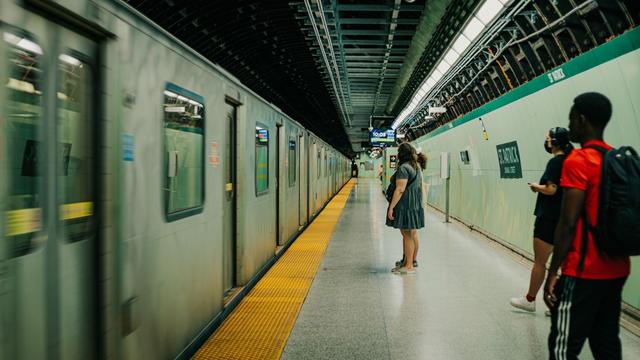
The Société de transport de Montréal (STM) has started a trial of artificial‑intelligence software designed to automatically spot individuals who linger on subway platforms, a move that began in September 2026 without a public announcement. The system uses image‑analysis algorithms to flag people who appear to be loitering, allowing transit staff to intervene when necessary.
Catherine Dupont‑Gagnon, a spokesperson for the STM, explained that the technology is intended to improve safety and operational efficiency by identifying patterns of behavior that could indicate a security risk or other concerns. The agency says the trial will run on selected stations while data is collected and evaluated for accuracy and reliability.
The introduction of AI‑driven surveillance marks a significant shift in the way Montreal’s public‑transit network monitors its environment. Historically, platform safety has relied on human observation and traditional CCTV systems. By automating detection, the STM aims to reduce response times and allocate personnel more effectively.
The deployment has prompted discussion among privacy advocates and ethicists, who warn that automated monitoring could raise questions about civil liberties and data handling. Critics note that the lack of a public notice about the trial limits transparency and may affect public trust in the transit system.
The STM has not released details on the specific algorithms, retention periods for captured footage, or the criteria used to define loitering. The agency indicated that the trial will be reviewed before any broader rollout and that any findings will inform future policy decisions regarding surveillance technology in the metro network.
As the test proceeds, the STM says it will continue to monitor the system’s performance and assess its impact on passenger safety, while also engaging with stakeholders to address any emerging concerns about the use of artificial intelligence in public spaces.