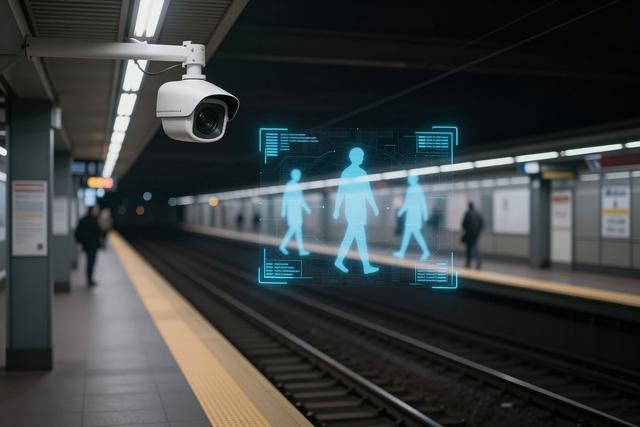
The Société de transport de Montréal (STM) began a trial of artificial‑intelligence software on September 4, 2026, that automatically flags passengers who appear to be loitering in the city’s subway system. The trial was launched without a public announcement and is being monitored by STM staff.
Catherine Dupont‑Gagnon, a cybercrime prevention specialist with the STM, is overseeing the deployment of the AI tool. The software is designed to analyze video feeds from existing surveillance cameras and generate alerts when individuals remain in a location for a period that matches the system’s definition of loitering. Those alerts are then reviewed by STM personnel for further action.
The introduction of the AI system has prompted discussion about its ethical implications. Critics have raised concerns about privacy, the potential for misidentifying innocent passengers, and the broader impact of automated surveillance on public spaces. While the STM has not released detailed criteria for what constitutes loitering, the debate highlights the tension between security objectives and civil liberties.
The STM, which operates Montreal’s public‑transport network, has been experimenting with various technology solutions to improve safety and operational efficiency. This AI trial represents a new phase in its use of advanced monitoring tools, following earlier implementations of standard CCTV systems. The agency’s decision to test the technology without prior public notice reflects an approach of internal evaluation before broader rollout, according to internal communications. The outcome of the trial will inform whether the STM expands the use of AI‑driven surveillance across its subway lines.