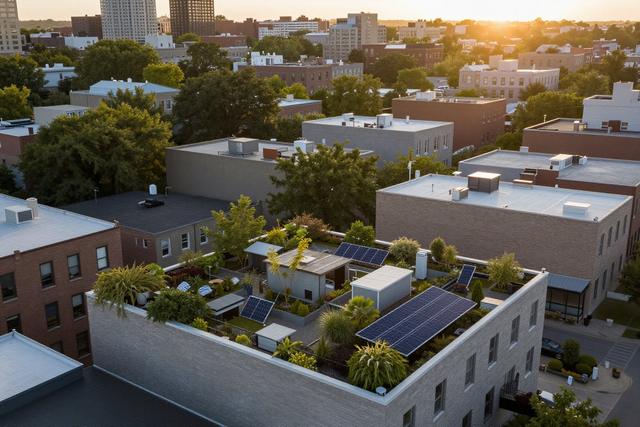
Researchers from Concordia University say that improved urban space planning could let neighbourhoods produce food, generate energy and cut carbon emissions, based on a case study of the Pointe‑Saint‑Charles district in southwest Montreal.
The analysis of the district's real‑estate framework and open spaces revealed possibilities for integrating agriculture and renewable energy into the urban landscape, pointing to untapped potential for food production, power generation and carbon‑footprint reduction.