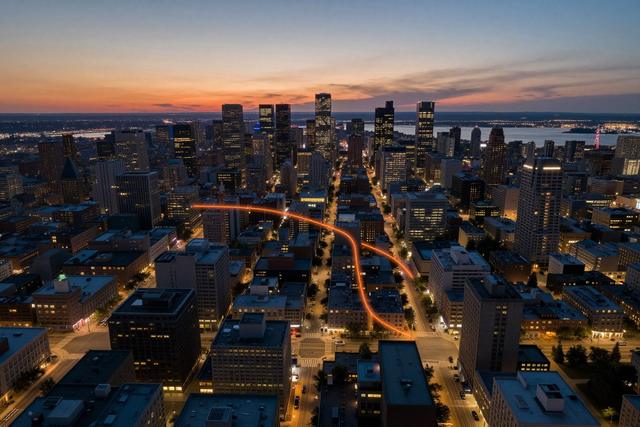
A new study released by the Autorité régionale de transport métropolitain (ARTM) projects that completing the extension of Montreal’s orange metro line could take thousands of cars off one of the city’s most heavily trafficked road corridors. The analysis, published on Saturday, July 25, 2026, focuses on the potential impact of closing the current eastern terminus and creating a continuous loop that would expand rapid‑transit service across a broader portion of the metropolitan area.
The orange line presently stops at a terminal in the east, leaving a gap in the network that forces many commuters to rely on personal vehicles for the final leg of their journeys. According to the ARTM study, extending the line to link with existing tracks would provide a direct rail alternative for a large segment of daily travelers. By offering a seamless connection, the extension is expected to draw a significant number of drivers away from road use, thereby alleviating pressure on the congested corridor that has long been a bottleneck for traffic flow.
The report quantifies the anticipated reduction in vehicle numbers simply as “thousands of cars,” emphasizing the scale of the expected shift without providing an exact figure. The study highlights that the removal of these vehicles would contribute to smoother traffic conditions, shorter travel times for remaining drivers, and lower emissions associated with stop‑and‑go congestion.
The proposed loop would not only enhance accessibility for residents in the eastern neighborhoods but also improve overall network resilience by providing alternative routes during service disruptions. By integrating the extension into the existing metro framework, the ARTM aims to strengthen public‑transit coverage citywide and encourage a modal shift away from private automobiles.
The ARTM’s findings arrive as municipal planners continue to evaluate infrastructure projects designed to address Montreal’s growing transportation demands. The study’s estimate of thousands of cars removed underscores the potential of transit‑oriented solutions to mitigate congestion on the city’s busiest roadways.