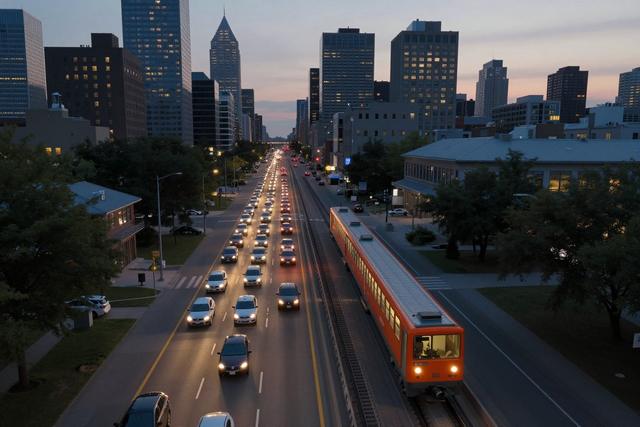
The Autorité régionale de transport métropolitain (ARTM) released a study on Tuesday indicating that extending and completing a loop on Montreal’s orange metro line could pull thousands of private vehicles off a heavily congested road corridor. The analysis, timed with a renewed push for the project, projects a measurable reduction in car traffic once the proposed expansion becomes operational.
The proposal calls for lengthening the existing orange line and adding a circular segment that would connect currently underserved neighborhoods to the broader rapid‑transit network. By creating a continuous loop, the plan aims to provide more direct routes for commuters who currently rely on personal automobiles to navigate the city’s busiest road sectors.
According to the ARTM report, the targeted road corridor experiences some of the highest levels of congestion in the metropolitan area. Reducing the number of cars traveling along this stretch is expected to ease bottlenecks, shorten travel times and improve overall traffic flow. The study does not provide an exact figure, but emphasizes that the impact would be measured in the thousands of vehicles removed from daily traffic counts.
The potential benefits extend beyond smoother commutes. Fewer cars on the road could lead to lower emissions, reduced fuel consumption and a modest improvement in air quality for residents living near the congested corridor. While the study stops short of quantifying environmental gains, the link between reduced vehicle use and cleaner streets is a recognized outcome of similar transit‑focused projects.
The orange line extension has resurfaced in municipal discussions after years of debate. The ARTM’s findings are now being used by city planners and transit officials to assess the feasibility and cost‑benefit balance of moving the project forward. No final decision has been announced, but the study provides a data‑driven argument for advancing the plan to address persistent traffic challenges.
Stakeholders, including local businesses and commuter groups, are expected to review the report as part of the broader evaluation process. The ARTM’s analysis adds a concrete traffic‑reduction perspective to the ongoing conversation about expanding Montreal’s rapid‑transit infrastructure.