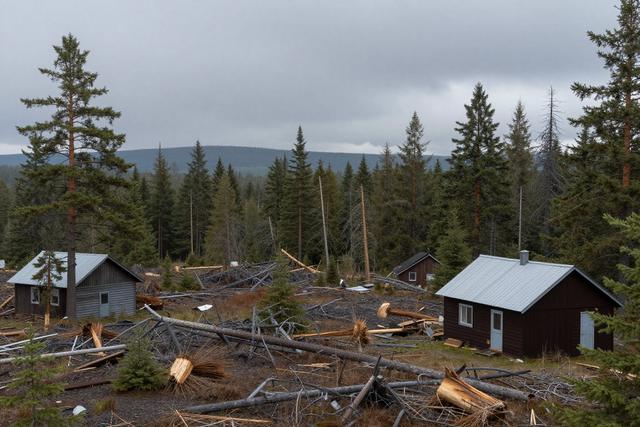
A possible tornado is believed to have struck the Laurentians region of Quebec on July 22, 2026, leaving behind extensive damage that has prompted an immediate investigation by Environment Canada. Officials arrived on the scene to assess the extent of the destruction and to determine whether a tornado was indeed responsible for the observed impacts.
Dominic Martel, a representative of Environment Canada, confirmed that the agency is actively monitoring the situation and gathering evidence to establish the nature of the event. He noted that the agency’s standard procedures involve reviewing radar data, eyewitness reports, and on‑the‑ground inspections to verify whether the damage aligns with tornado characteristics.
The Laurentians, a popular recreational area known for its forests and lakes, does not often experience tornadoes, making this incident unusual for the province. Environment Canada’s weather monitoring network, which tracks severe weather across Quebec, has highlighted the rarity of such phenomena in the region and is treating the incident with heightened scrutiny.
While the investigation continues, preliminary observations indicate that the damage includes downed trees, disrupted power lines, and structural impacts to buildings. Local authorities have coordinated with emergency services to ensure public safety and to begin cleanup efforts. Residents in the affected communities have been advised to stay alert for any further weather developments and to follow guidance from municipal officials.
Environment Canada will release a detailed report once the analysis is complete, outlining the cause of the damage and any recommendations for future preparedness. The agency’s involvement underscores its role in responding to severe weather events, even those that are infrequent in Quebec.
The incident serves as a reminder of the importance of vigilant weather monitoring, especially in areas where extreme events are not common. Authorities remain focused on confirming the event’s classification and on supporting the affected communities as they begin the recovery process.