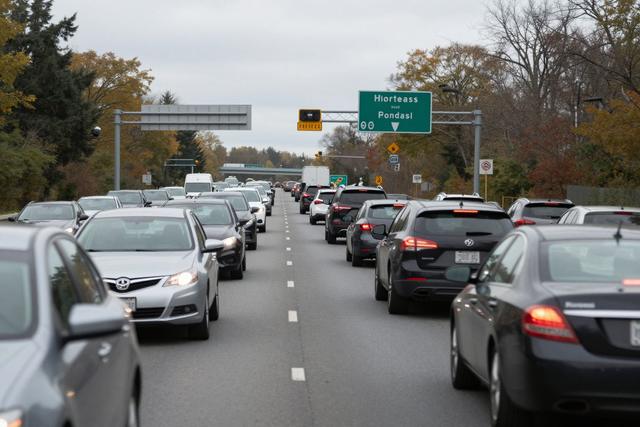
Car traffic in the regions surrounding Montreal has risen sharply, adding almost two million vehicles to Quebec's roads over the past two decades. The surge represents the fastest increase in vehicle numbers recorded anywhere outside the city's core, according to recent traffic counts.
Over the last twenty years, Quebec's highway system has accommodated roughly two million additional cars, most of which are concentrated in the suburban and exurban corridors that link smaller towns to the metropolitan area. These corridors have seen expanding commuter flows as residents seek housing beyond the high‑density core while maintaining access to employment and services in Montreal.
Despite the pronounced growth outside the city, Montreal itself remains Quebec's most congested urban centre, with traffic density still exceeding that of any other municipality in the province. The contrasting patterns highlight a shift in where vehicle use is expanding, even as the central city continues to face chronic congestion challenges.
In comparison, vehicle counts within Montreal's city limits have risen at a slower pace during the same period, reinforcing the observation that the bulk of new traffic is occurring beyond the metropolitan perimeter.
The addition of two million vehicles over twenty years averages to about one hundred thousand new cars each year across the surrounding region.
The increased volume has contributed to higher occupancy rates on major highways that link the suburbs to Montreal, though specific congestion levels were not detailed in the count.
Overall, the data underscores a shift in traffic dynamics, with the outer ring of municipalities experiencing the most pronounced growth in vehicle numbers while the central city retains its status as the province's traffic hotspot.