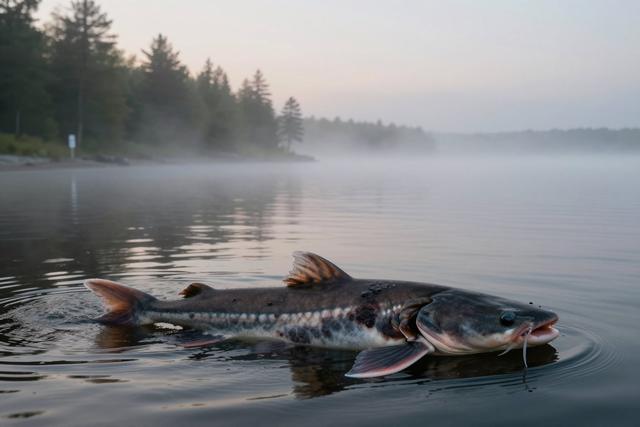
Researchers have confirmed the presence of a melanoma‑type transmissible cancer in brown bullhead catfish inhabiting Lake Memphremagog, a body of water that lies on the border between Quebec and Vermont. Laboratory analysis of fish collected from the lake showed that roughly one third of the specimens examined carried visible skin tumours associated with the disease.
The study, conducted by a team of scientists, marks the first time a naturally occurring transmissible cancer has been documented in a fish species. Unlike cancers that arise independently in individual organisms, transmissible cancers can spread from one animal to another through the transfer of living cancer cells. In this case, the tumour cells appear to behave similarly to melanoma, a type of cancer that originates in pigment‑producing cells.
Sampling was carried out on Lake Memphremagog, which spans the international boundary separating the Canadian province of Quebec and the U.S. state of Vermont. The researchers focused on brown bullhead catfish, a common freshwater species in the region. Of the catfish examined, about 33 percent displayed the characteristic skin lesions, indicating a relatively high prevalence within the sampled population.
The discovery expands the known range of transmissible cancers, which have previously been recorded in a limited number of mammalian hosts such as dogs, Tasmanian devils and certain marine bivalves. The identification of such a disease in fish suggests that transmissible cancers may be more widespread across animal groups than previously understood.
While the immediate impact on the lake’s ecosystem remains under investigation, the finding raises questions about the potential for disease spread among fish populations and the broader implications for wildlife health monitoring. The research team plans further studies to determine how the cancer is transmitted, its effects on catfish survival rates, and whether similar conditions exist in other freshwater systems.
The report was released on Sunday, July 26, 2026, and adds a new dimension to ongoing efforts to track emerging wildlife diseases across North America.