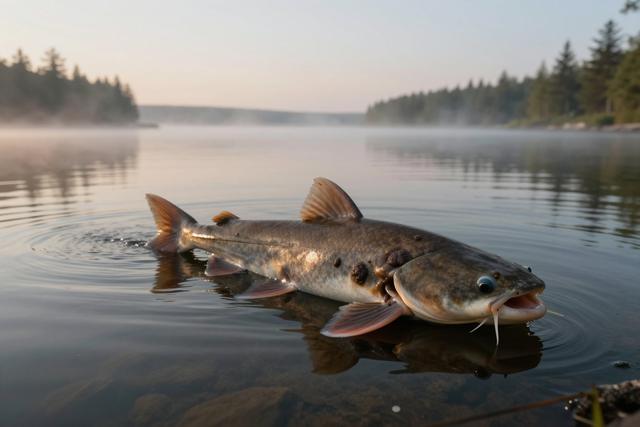
Scientists have identified a transmissible form of melanoma in brown bullhead catfish living in Lake Memphremagog, a body of water that straddles the Quebec‑Vermont border. The investigation, conducted by a team of researchers, found that roughly one third of the catfish examined – about 33 percent – carried melanoma tumors that appear capable of spreading between individuals.
The discovery marks the first documented instance of a transmissible cancer in fish. Until now, transmissible cancers have been recorded only in a limited number of mammalian species, most notably the canine transmissible venereal tumor in dogs and the facial tumor disease in Tasmanian devils. Those cases are considered exceptional because cancers normally arise from an individual’s own cells and are not passed from one animal to another.
In the Lake Memphremagog study, researchers sampled brown bullhead catfish from various locations around the lake and performed pathological examinations. The presence of melanoma tumors in a substantial proportion of the sampled population indicated that the disease was not isolated to a few individuals but was widespread enough to suggest an infectious mechanism. While the exact pathway of transmission has not been detailed, the pattern mirrors that of known transmissible cancers in other species, where cancer cells themselves act as the infectious agent.
The finding expands the known range of organisms capable of hosting transmissible cancers and raises questions about how such diseases emerge and persist in aquatic environments. It also prompts further investigation into the ecological impact on the lake’s fish community and potential risks to other species sharing the habitat.
Researchers emphasize that the identification of this transmissible melanoma provides a unique opportunity to study cancer biology across taxonomic groups. By comparing the mechanisms in fish with those already described in mammals, scientists hope to gain broader insight into the conditions that allow cancer cells to become contagious. The work underscores the importance of ongoing surveillance of wildlife health, especially in ecosystems that cross international borders such as Lake Memphremagog.