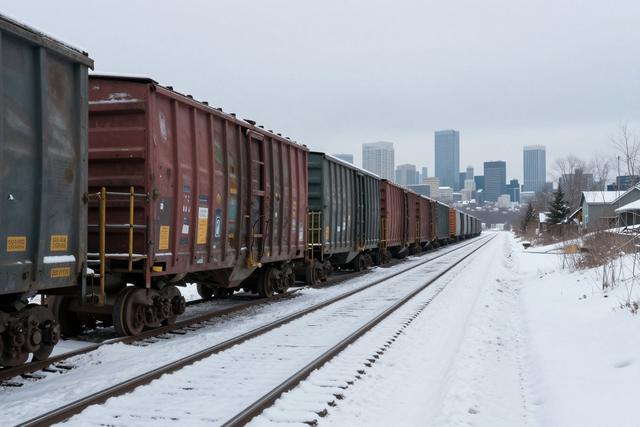
The Transportation Safety Board of Canada announced that it has been unable to pinpoint a definitive cause for the freight train derailment that occurred in northern Quebec in December 2025. While investigators have not identified a single factor, they noted that the region’s rapid temperature fluctuations could have played a role in the incident.
The board’s report, released after a comprehensive examination of the wreckage and track conditions, emphasizes that the evidence collected does not conclusively point to any mechanical failure, human error, or external interference. The investigation team examined the train’s braking system, wheel assemblies, and the rail infrastructure, but none of these components showed clear signs of malfunction that would explain the derailment.
Temperature swings in the area have been highlighted as a possible contributing element. Seasonal shifts from sub‑freezing nights to milder daytime temperatures can cause metal components to expand and contract, potentially affecting track geometry and wheel‑rail interaction. However, the board stopped short of stating that these thermal variations were the direct cause, describing them only as a factor that may have influenced the circumstances surrounding the accident.
The TSB’s findings leave the precise trigger of the derailment undetermined, underscoring the challenges of investigating incidents in remote, climate‑sensitive regions. Authorities continue to monitor the affected railway corridor for any signs of lingering safety concerns, and the board indicated that further data collection may be required before a final conclusion can be drawn.
The lack of a clear causal determination means that rail operators, regulators, and local communities must remain vigilant as they await additional insights that could inform future safety measures and prevent similar events in the harsh northern environment.