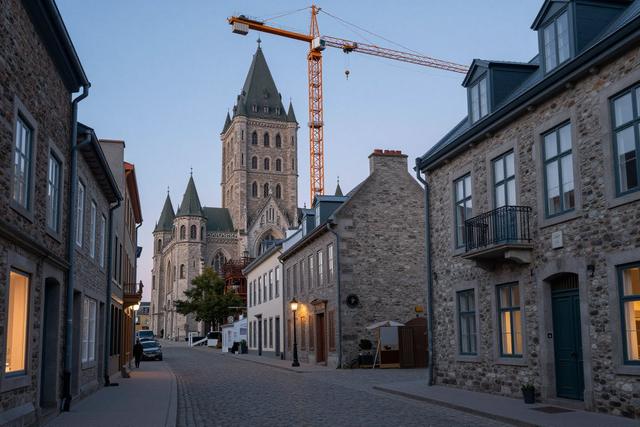
UNESCO has indicated that the World Heritage designation for Old Quebec could be jeopardized by the proposed Third Link bridge, a development that has drawn attention from the province’s tourism sector. Officials from the tourism industry acknowledge the potential risk but stress that any loss of status would not constitute a disaster for the region’s visitor economy.
The Third Link project envisions a new crossing over the St. Lawrence River, connecting the historic peninsula of Old Quebec with the mainland. Critics argue that the bridge’s presence may alter the visual and spatial character that contributed to the area’s inscription as a UNESCO World Heritage site. Preservation concerns focus on how the infrastructure could impact the historic streetscape, sightlines and overall ambience of the 17th‑century neighbourhood.
UNESCO’s assessment highlights the importance of maintaining the integrity of the site’s cultural landscape. While the organization has not yet withdrawn the designation, it has warned that the bridge could trigger a review of the status if the historic character is deemed compromised.
Tourism representatives, responsible for promoting Quebec City’s attractions, have responded by noting that the city’s appeal extends beyond the UNESCO label. They contend that visitors are drawn to the broader cultural offerings, culinary scene and festivals that define Quebec City, and that the loss of the heritage tag would not dramatically diminish tourist numbers.
The debate underscores a tension between infrastructure development aimed at improving regional connectivity and the desire to preserve a celebrated historic environment. Stakeholders are expected to continue discussions to reconcile transportation needs with heritage protection, as the Third Link project proceeds through planning stages.
The outcome of these deliberations could set a precedent for how major urban projects are evaluated against international heritage criteria, influencing future decisions in other historic districts worldwide.