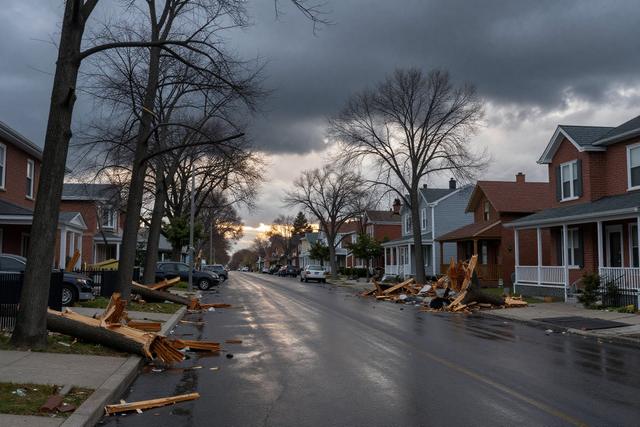
A sudden, violent thunderstorm swept through the northern suburbs of Montreal on Thursday, July 2, 2026, unleashing powerful winds that lasted roughly five minutes. In that brief window, the storm toppled numerous trees across residential streets and public spaces, leaving a trail of debris and prompting an immediate municipal response.
The intensity of the winds was enough to uproot mature trees and break large branches, creating hazards for motorists and pedestrians alike. Power lines were briefly disrupted in several neighborhoods, though service was restored quickly as crews worked to clear the fallen vegetation. Residents reported hearing the roar of the storm and seeing a rapid onset of rain and wind that subsided almost as quickly as it began.
City crews were dispatched within minutes of the storm’s passage to assess damage and begin cleanup. Teams focused on removing downed trees and branches from roadways, sidewalks, and public parks to restore safe passage for traffic and pedestrians. The cleanup effort also involved trimming remaining limbs that posed a risk of further falls, as well as checking for damage to infrastructure such as streetlights and drainage systems.
While the storm’s duration was short, its impact was felt across the affected communities. Local authorities reminded residents to stay alert for weather alerts, especially during the summer months when convective storms can develop rapidly. The incident underscores the need for prompt emergency response capabilities in the face of brief but severe weather events. No injuries were reported, and normal conditions began to return as crews cleared the debris and restored affected services.