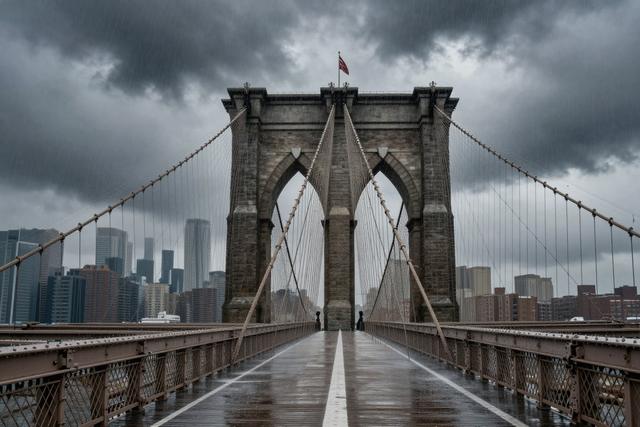
New York City is preparing for a stretch of stormy weather from September 23 through September 27 as a nor’easter moves toward the region. Meteorologists predict a combination of high winds, elevated tides and rain, prompting city officials to issue a specific warning for pedestrians and cyclists to avoid the Brooklyn Bridge during the peak of the system.
The approaching low‑pressure system is expected to bring sustained breezes that could reach hazardous levels, especially over the East River where the iconic suspension bridge spans. Elevated water levels from the high tide are also forecast, increasing the risk of spray and slippery conditions on the bridge’s walkways. Residents and commuters are advised to seek alternate routes for crossing between Brooklyn and Manhattan while the storm passes.
The nor’easter marks the end of the first week of fall in the city, a period that typically sees a transition from summer heat to cooler temperatures. This particular system is notable for its strength, combining wind and rain that could affect outdoor activities and transportation across the five boroughs. While the warning specifically mentions the Brooklyn Bridge, similar precautions may be advisable for other exposed structures and waterfront areas.
City agencies are monitoring the situation closely and stand ready to respond to any incidents that may arise from the high winds or flooding. Public transportation services are reviewing schedules, and the Department of Transportation is prepared to close or restrict access to vulnerable routes if conditions worsen. Residents are encouraged to stay informed through official channels and to secure loose objects that could become projectiles in strong gusts.
As the nor’easter moves inland, the forecast calls for a gradual tapering of wind speeds and a reduction in rainfall by the weekend’s end. However, the combination of wind, tide and rain over the next several days underscores the need for caution, particularly for those planning to use the Brooklyn Bridge during the storm’s peak.
The city’s response aims to minimize disruption and ensure public safety as the weather system transitions the area into the cooler, wetter phase of the season.