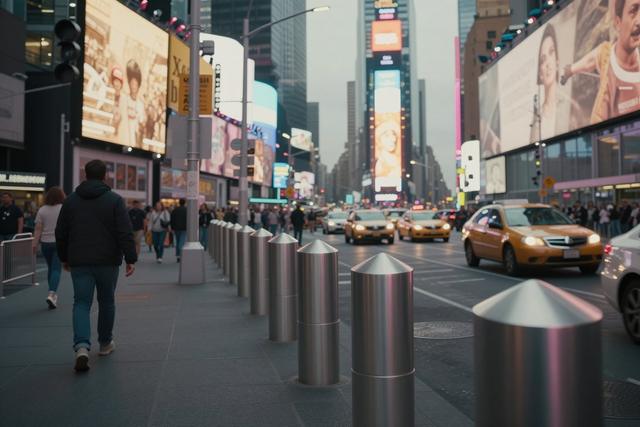
Mayor Bill de Blasio announced that New York City will install additional security bollards in Times Square beginning in January 2027. The new fixtures will join the existing protective barriers that have guarded the bustling plaza for a quarter‑century. The move marks the 25th anniversary of the city’s post‑September 11 effort to harden public spaces against vehicle‑borne threats.
The initiative follows a program launched after the 2001 terrorist attacks, when the city first deployed bollards in high‑traffic areas to deter hostile vehicles. Over the past two decades, those early installations have become a standard feature of New York’s urban security architecture. By expanding the network in Times Square, officials aim to maintain that level of protection as pedestrian volumes continue to grow.
Times Square, known for its dense crowds and constant flow of tourists, has been a focal point for security planning since the early 2000s. The upcoming bollards will be positioned along key thoroughfares and entry points, complementing other measures that have been layered over the years. City engineers will coordinate the placement to minimize disruption to traffic and nearby businesses while ensuring the barriers are visible and effective.
Mayor de Blasio highlighted that the project reflects a long‑term commitment to public safety, rather than a reactionary response to a single incident. The timing, aligned with the 25‑year milestone, underscores the continuity of the city’s strategy to safeguard its most iconic public spaces. While the installations are scheduled for early 2027, the planning and design phases have been underway for several months, involving input from security experts and urban planners.
Residents and visitors can expect the new bollards to blend with the existing streetscape, maintaining the visual character of Times Square while reinforcing its defensive posture. The city’s ongoing investment in such infrastructure demonstrates a sustained focus on preventing future attacks and protecting the daily flow of people through one of the nation’s most visited landmarks.