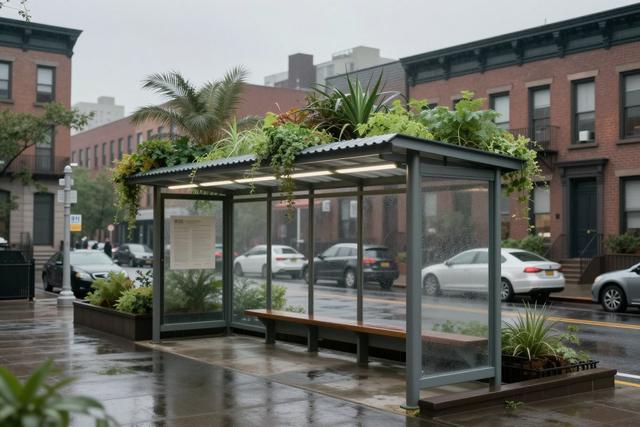
New York City officials began testing a green‑roof rain garden installed on a bus shelter in the Brownsville neighborhood of Brooklyn this year. The pilot aims to determine whether the rooftop garden can be replicated at bus stops throughout all five boroughs as part of a broader storm‑water management and streetscape improvement effort.
The rain‑garden shelter features a vegetated roof designed to capture and filter rainwater that would otherwise flow directly into the city’s drainage system. By slowing runoff, the garden helps reduce the burden on sewer infrastructure during heavy precipitation. In addition, the planting adds visual interest to the streetscape, offering a modest green space in a densely built area.
City agencies overseeing the project will monitor the shelter’s performance over the coming months, tracking factors such as water absorption rates, plant health, and maintenance requirements. Data collected from the Brownsville site will inform decisions about scaling the design to other locations, with the goal of creating a network of similar installations that collectively mitigate flooding and enhance neighborhood aesthetics.
If the pilot proves successful, the city plans to evaluate the feasibility of installing rain‑garden roofs on bus shelters across Manhattan, Queens, the Bronx, and Staten Island. Officials view the initiative as a practical application of green infrastructure that aligns with broader environmental objectives while providing tangible benefits to commuters and residents alike.