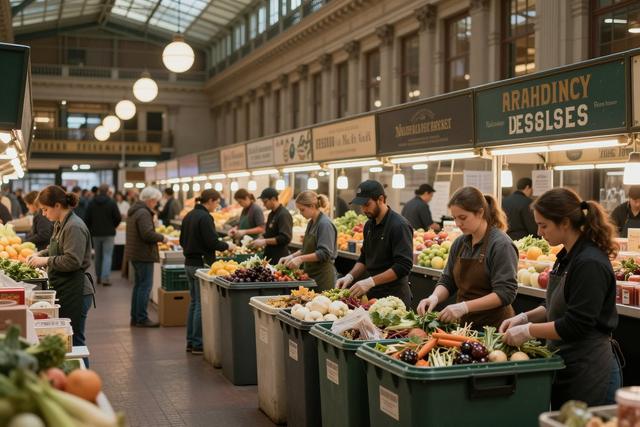
Over the past two years, Reading Terminal Market in Philadelphia has diverted more than one million pounds of organic waste away from landfills, a milestone that captured the attention of the U.S. Environmental Protection Agency. The historic indoor market, a cornerstone of the city’s food scene, attributes the achievement to a series of waste‑diversion initiatives aimed at reducing food waste and limiting landfill disposal.
The EPA’s acknowledgment highlights the market’s systematic approach to separating compostable material from other refuse. By partnering with local compost facilities and training vendors on proper waste handling, the market has been able to channel large quantities of food scraps, unsold produce, and other organics into a recycling stream rather than a landfill. The cumulative effect of these practices is the removal of over a million pounds of organic matter from the waste stream within a two‑year period.
Reading Terminal Market’s effort aligns with broader municipal goals to cut landfill use and lower greenhouse‑gas emissions associated with food decomposition. The market’s success provides a tangible example for other food‑service venues seeking to implement similar programs. While the EPA has not disclosed specific funding or regulatory incentives tied to the achievement, its public recognition signals support for continued expansion of food‑waste reduction strategies.
The market’s leadership plans to build on the momentum, exploring additional composting partnerships and educational outreach to sustain and increase diversion rates. As the city monitors overall waste trends, the market’s performance may serve as a benchmark for future environmental initiatives across Philadelphia.