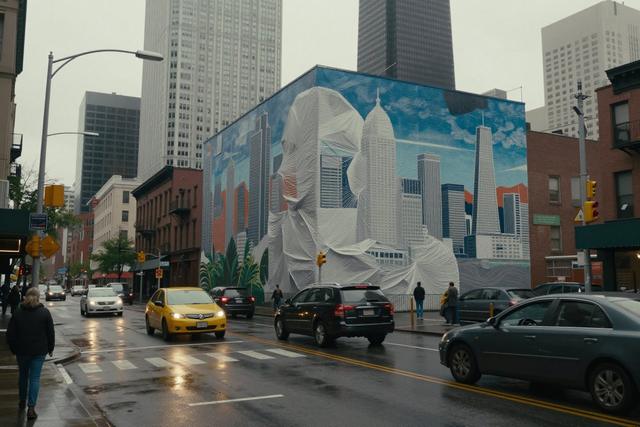
On September 23, 2026, a segment of Ninth Avenue in downtown Seattle reopened to traffic after city officials covered a street mural that had blocked the roadway. The closure, which began several weeks earlier, ended once the artwork was concealed.
The mural was applied in August as part of a pedestrian market that temporarily turned part of Ninth Avenue into a public space. Organizers intended the design to be short‑term, but the paint adhered to the pavement in a way that could not be removed without damaging the surface.
Because removal was not feasible, the city kept the affected stretch closed while it examined alternatives. After a period of assessment, officials chose to cover the mural with a protective layer, allowing the road surface to be restored for vehicle use.
Covering the artwork avoided further disruption to the market schedule and eliminated the need for extensive resurfacing. City engineers applied a fast‑dry coating over the paint and then repainted lane markings. The work was finished within the week, enabling the avenue to reopen on schedule.
Local businesses noted that the closure had limited access to storefronts along the block, and the reopening restores normal traffic flow. The pedestrian market continues on adjacent streets, while the covered mural remains out of sight.
Officials indicated the incident highlights the challenges of temporary art installations on active roadways and said future projects will incorporate removal plans that account for road surface durability.