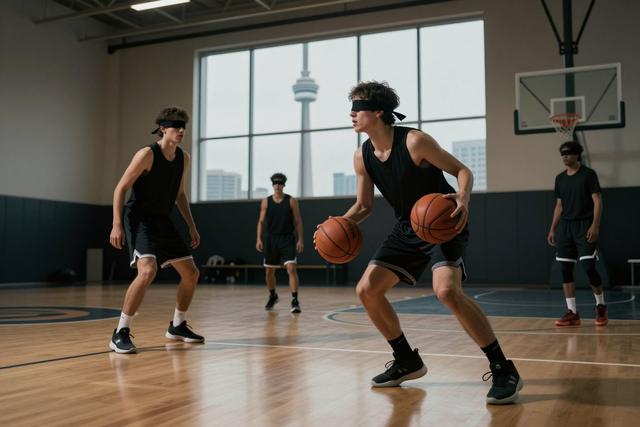
In June 2026, Toronto became the site of a historic moment for Canadian sport when the country's first organized blind basketball game took place. The three‑on‑three match was staged by the Blind Basketball Association of Canada, a new body founded by Eli Bomers to provide a dedicated platform for visually‑impaired athletes.
The inaugural game featured three players on each side, adhering to the internationally recognized 3‑on‑3 format that emphasizes speed, teamwork and adaptation for players who rely on sound cues and tactile markings. The event was held in a local gymnasium equipped with audible signals and high‑contrast floor markings to ensure safety and competitive fairness. Participants, all visually‑impaired, demonstrated the skill and enthusiasm that had previously lacked an organized outlet in Canada.
Before the formation of the association, the nation had no formal basketball program for blind or visually‑impaired players. Recognizing this gap, Eli Bomers established the Blind Basketball Association of Canada earlier in 2026, aiming to create regular opportunities for athletes who had been excluded from mainstream basketball activities. The June game represented the first concrete step toward that goal, providing a model that could be replicated in other cities and provinces.
Organizers highlighted the importance of the event for community building, noting that the sport offers both physical benefits and a sense of belonging for participants. By introducing a structured competition, the association hopes to attract new members, secure funding for equipment and facilities, and eventually develop leagues and tournaments across the country.
The successful launch of the blind basketball program in Toronto signals a broader commitment to inclusive sport in Canada. Stakeholders plan to use the momentum from the inaugural game to advocate for additional resources and to raise awareness of the capabilities of visually‑impaired athletes. As the Blind Basketball Association of Canada looks ahead, the focus remains on expanding participation and fostering a national network that supports blind basketball at all levels.