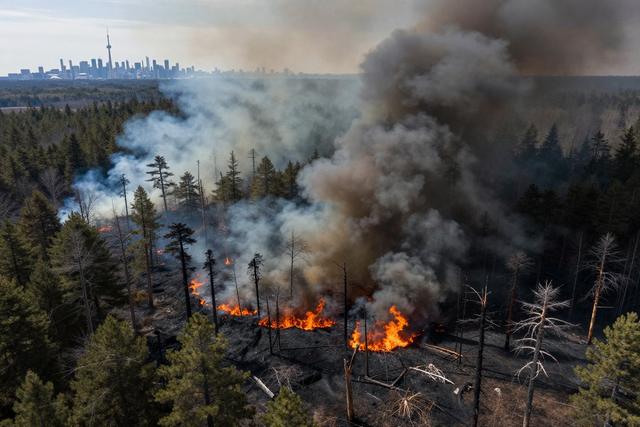
Ontario’s forests are now scarred by a fire season that has already eclipsed the previous high water mark set in 2021. By the afternoon of July 21, more than 7,250 square kilometres of woodland have been consumed by wildfires, a figure that places the current season as the most severe on record for the province.
The scale of the burned area is notable not only for its sheer size but also for the speed with which the benchmark was surpassed. Earlier in the year, the 2021 season held the record for the largest area burned, yet the fires of 2026 have already exceeded that total, indicating an acceleration of fire activity across the province.
Geographically, the affected land spans a substantial portion of Ontario’s forested terrain, underscoring the breadth of the situation. While the exact locations within the province are not detailed, the cumulative impact of the fires is reflected in the total area measured in the thousands of square kilometres.
The designation of this period as the worst wildfire season on record is based on the comparison of total burned acreage to previous years, with the 2021 figure serving as the prior benchmark. The current tally of over 7,250 km² confirms that fire activity has moved beyond that earlier high, establishing a new reference point for future assessments.
The ongoing nature of the season suggests that the total area burned could continue to rise, further extending the gap between this year’s numbers and those of past seasons. As the province monitors the situation, the record‑setting extent of the wildfires remains a key indicator of the intensity of the current fire year.
Overall, the data from July 21 demonstrates that Ontario is confronting an unprecedented level of forest loss due to wildfires, marking a pivotal moment in the province’s environmental history.