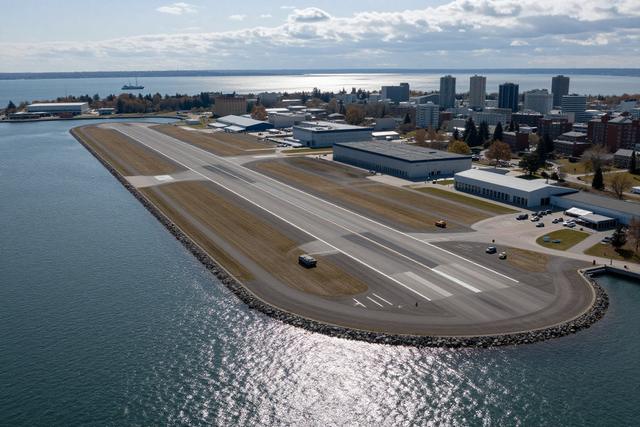
Toronto officials released a city report on Friday warning that the Ontario government’s plan to widen the runway at Billy Bishop Toronto City Airport could compromise water quality in the Inner Harbour. The document says the proposed extension, intended to accommodate larger jet aircraft, may reduce the natural flow of water through the harbour, limiting its capacity to flush sewage and other pollutants.
The report, prepared by the City of Toronto, highlights that changes to the harbour’s hydrology could diminish the flushing action that helps keep the water clear and safe. According to the analysis, a slower flow could affect not only the aesthetic and recreational use of the Inner Harbour but also the health of local wildlife and the quality of drinking water drawn from the area.
Billy Bishop Airport, located on the Toronto Islands, is at the centre of a provincial review of a project to lengthen its runway. The Ontario provincial government is evaluating the proposal to allow the airport to handle larger jet operations, a move that would alter the current configuration of the airport’s facilities.
City officials say the potential hydrological impacts stem from the runway’s proximity to the harbour’s inlet and the way water moves around the islands. By altering the shoreline and possibly the depth of channels, the expansion could impede the natural exchange of water between the lake and the inner basin.
The city’s assessment does not provide a definitive outcome but urges that any decision on the runway project consider the identified risks to water flow, sewage flushing, recreation, biodiversity and drinking water safety. It calls for further study and mitigation measures before any construction proceeds.
The province has not yet announced a final decision on the runway lengthening, and the city’s report adds a new dimension to the ongoing discussion about the airport’s future role in Toronto’s transportation network.