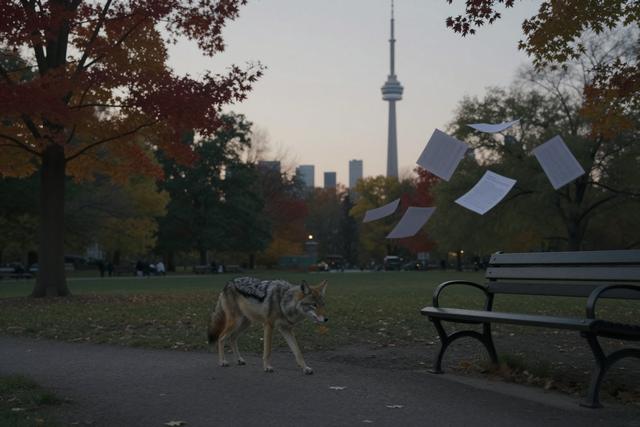
A new study released this week recommends that the City of Toronto move quickly to euthanize coyotes that become persistent nuisances and to overhaul the municipality’s existing wildlife‑control approach. The paper, authored by a lead researcher who worked with city officials, argues that prompt removal of problem animals is necessary to address ongoing conflicts between residents and the growing coyote population.
The research was prepared in collaboration with the City of Toronto and presented as a formal recommendation for policy change. Its author emphasizes that the current strategy has not kept pace with the increasing presence of coyotes in urban neighborhoods, and that a revised framework would better protect public safety while managing wildlife.
Urban coyotes have become a familiar sight across Toronto, prompting a citywide conversation about how best to coexist with the species. Residents have reported encounters ranging from sightings to more serious incidents, fueling a debate over whether lethal control or non‑lethal measures should dominate the city’s response. The study adds a clear voice to that conversation, urging a shift toward immediate euthanasia for animals that repeatedly cause problems.
City officials have noted that persistent coyotes are viewed as ongoing nuisances, a characterization that underpins the study’s call for decisive action. The recommendation seeks to differentiate between occasional wildlife sightings and animals that repeatedly violate the boundary between wild and urban spaces.
While the paper does not detail specific implementation steps, it signals a desire for the city to revise its management plan and to act swiftly when coyotes cross the line from occasional presence to continual disturbance. The recommendation arrives at a time when Toronto’s wildlife policy is under scrutiny, and it may shape future decisions on how the city balances human concerns with the presence of native predators.
The study’s findings are expected to be reviewed by municipal decision‑makers as Toronto continues to grapple with the challenges of an expanding urban coyote population.