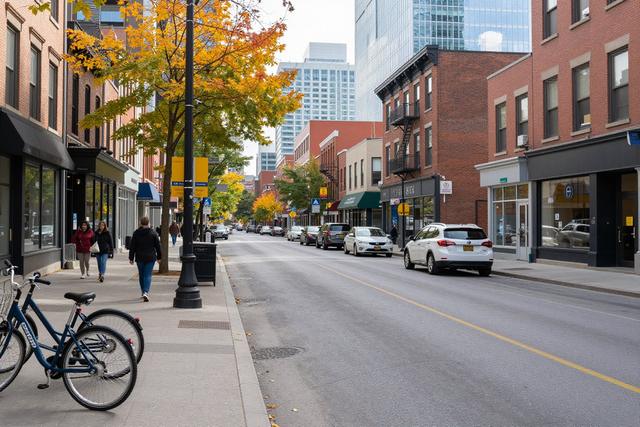
Toronto city councillors voted Friday to extend the city's pedestrian‑only zones after a recent pilot on Church Street that removed cars from a portion of the thoroughfare. The decision follows a trial that began earlier in June, when a segment of Church Street was closed to vehicle traffic in order to evaluate the impact of car‑free streets. Council members said the move responds to strong public demand for more pedestrian‑oriented experiences in the downtown core.
During the pilot, the closed stretch of Church Street allowed pedestrians to move freely, while cyclists and transit continued to operate on adjacent routes. The temporary closure was monitored by city staff to assess safety, accessibility and business activity. Feedback collected from residents and local businesses indicated a favorable reception, prompting councillors to consider a broader rollout.
In the Friday session, the council approved a plan to broaden the existing pedestrian‑only zones, although specific streets and the timeline for implementation were not disclosed in the vote record. The City of Toronto indicated that the expansion will be guided by the data gathered from the Church Street test and future community consultations. Officials emphasized that the goal is to create more walkable spaces without compromising overall traffic flow.
The vote aligns with a growing trend among municipalities to prioritize active transportation and public realm improvements. City planners have noted that pedestrian‑friendly streets can enhance economic activity, improve air quality and support healthier lifestyles. The council’s action signals that Toronto intends to build on the initial Church Street experiment as part of a longer‑term strategy for a more pedestrian‑centric urban environment.