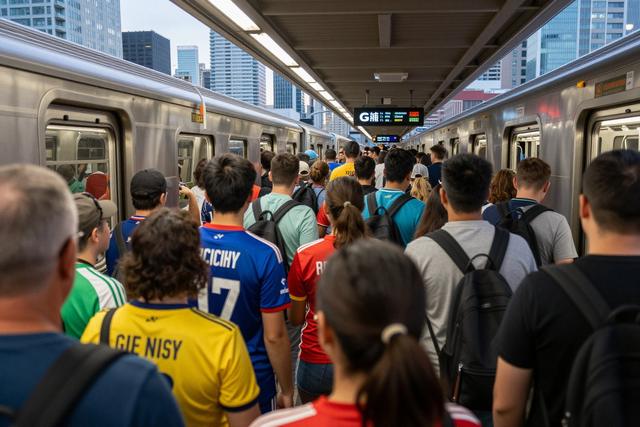
Metrolinx said the average daily number of passengers traveling on GO trains and the UP Express climbed to roughly 30,000 during the six FIFA World Cup match days held in Toronto this July. The figure topped the ridership levels recorded for the previous World Series, underscoring the draw of the international tournament for local commuters and visitors.
The spike in usage was reported by the province’s regional transit agency, which monitors passenger volumes across its network. GO Transit and the UP Express, both operated under Metrolinx, saw a marked increase in boardings as fans from across Canada and abroad converged on the city to attend the games. The agency noted that the average daily count of 30,000 passengers reflects the combined traffic on both services over the six match days.
Toronto’s role as a host city for the 2026 FIFA World Cup has brought heightened attention to its public‑transport infrastructure. The tournament’s schedule includes several matches in the city, prompting many attendees to choose rail options for convenience and to avoid road congestion. The rise in ridership aligns with Metrolinx’s expectations that major sporting events would boost demand for its services.
While the World Series previously set a benchmark for high transit usage, the World Cup’s global appeal generated a larger influx of riders within a short period. Metrolinx officials indicated that the agency will continue to monitor patterns and adjust service levels as needed to accommodate future spikes linked to large‑scale events.
The data highlights the importance of integrated transit solutions in supporting Toronto’s capacity to host international competitions. By providing reliable rail connections, GO Transit and the UP Express help manage crowd movement and contribute to the city’s overall event logistics.
As the World Cup progresses, the agency expects the elevated ridership to taper once the matches conclude, but the experience offers valuable insights for handling similar demand in the future.