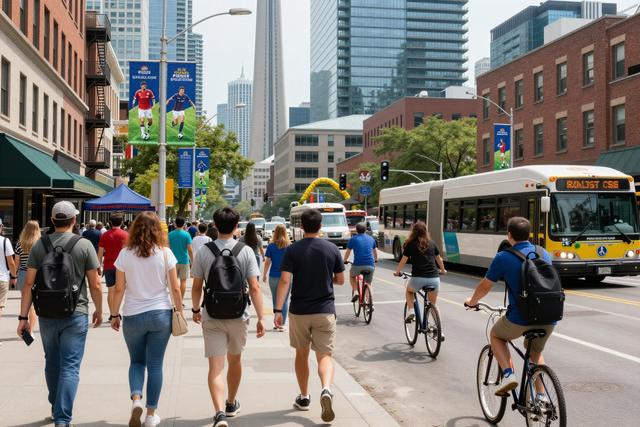
Toronto saw a noticeable rise in pedestrians, cyclists and public‑transit riders as the city hosted matches for the 2026 FIFA World Cup from June 8 to July 8. Residents and visitors alike opted for walking, bike‑share programs and the Toronto Transit Commission’s services while crowds gathered for the tournament.
The increase was reported by CBC News in collaboration with the City of Toronto, the TTC and Bike Share Toronto. All parties confirmed that transportation patterns shifted during the month‑long event, with more people choosing non‑car options to move around the city’s core and surrounding neighborhoods.
The World Cup attracted large numbers of spectators, prompting a surge in demand for alternative mobility. City officials noted that the influx of fans coincided with higher usage of bike‑share stations and a busier transit network, reflecting a broader trend toward sustainable travel during major events.
The TTC recorded higher ridership levels across its bus, streetcar and subway routes, while Bike Share Toronto reported that its docking stations experienced increased turnover. The City of Toronto highlighted these changes as part of its ongoing efforts to promote active transportation and reduce traffic congestion, especially when the city hosts international gatherings.
Overall, the 2026 FIFA World Cup demonstrated how a global sporting event can influence local travel habits, encouraging both locals and visitors to rely more on walking, cycling and public transit throughout Toronto’s streets and transit corridors.