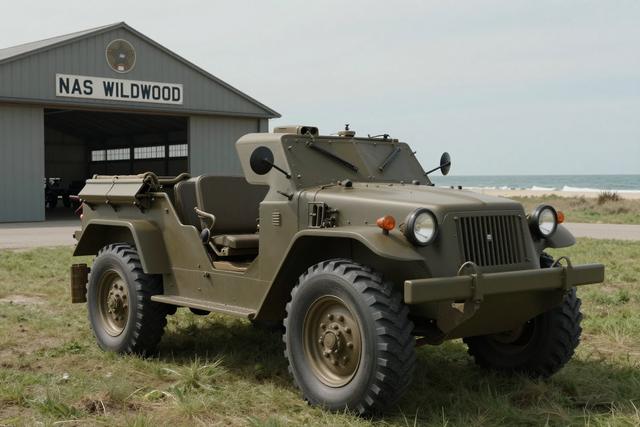
The Naval Air Station Wildwood Aviation Museum announced on July 25, 2026 that it has received a loan of an M16A1 half‑track armed with four Browning .50‑caliber machine guns. The vehicle, an 80‑year‑old piece of World War II equipment, will become part of the museum’s expanding historic military collection in Lower Township, Wildwood, New Jersey.
The half‑track, originally designed for troop transport and fire support, is equipped with a quartet of .50‑caliber machine guns mounted on its sides. Its arrival adds a tangible example of mechanized warfare to the museum’s World War II exhibit, which already features aircraft, uniforms, and personal artifacts from the era. Museum staff plan to place the vehicle on display in a dedicated area that allows visitors to view the vehicle up close while learning about its role in the conflict.
Museum officials indicated that the loan arrangement provides the institution with a rare opportunity to showcase a complete, operationally configured half‑track without requiring permanent acquisition. The vehicle will remain under the ownership of the lending organization and will be returned after a predetermined period, though the exact duration was not disclosed. The museum’s curatorial team is preparing interpretive panels that will detail the half‑track’s design, its deployment in combat, and the significance of its four .50‑caliber guns.
The addition of the M16A1 is expected to draw interest from local residents, school groups, and military history enthusiasts. By integrating the half‑track into its World War II narrative, the museum aims to provide a more comprehensive view of the ground forces that complemented the aerial operations highlighted elsewhere on the site. The exhibit enhancement aligns with the museum’s ongoing efforts to preserve and present artifacts that illustrate the full scope of wartime technology and strategy.
Visitors to the museum can anticipate seeing the half‑track alongside existing displays, offering a broader perspective on the diverse equipment used by Allied forces during the 1940s. The museum encourages patrons to explore the new addition as part of its broader educational mission.