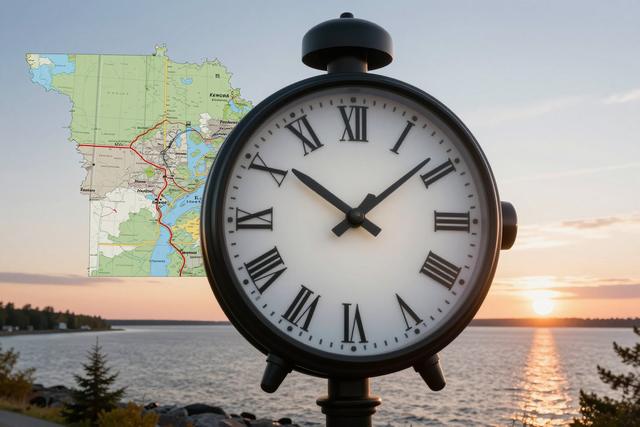
Manitoba's recent decision to remain on daylight saving time throughout the year has sparked a conversation among residents of nearby Kenora, Ontario, about whether to adjust their own clocks to match the change. The provincial announcement, made on September 19, 2026, means that Manitoba will no longer revert to standard time in the fall, creating a permanent one‑hour shift relative to most of the surrounding region.
Kenora, situated just across the provincial border, shares daily ties with Manitoba in commerce, travel, and communication. The alteration in Manitoba's timekeeping has prompted local citizens to examine the practical implications of staying on the same schedule as their southern neighbor. Some community members see potential advantages, such as smoother coordination of business hours, transportation timetables, and cross‑border services that currently have to account for the twice‑yearly clock change.
Others consider the broader effects on daily life, including school schedules, health services, and personal routines that are currently aligned with Ontario's standard time practices. The discussion reflects a broader regional trend where jurisdictions close to each other weigh the benefits of synchronizing time observances to reduce confusion and improve efficiency.
The Manitoba government has not indicated any requirement for neighboring provinces to adopt the same system, leaving the decision entirely to local authorities and residents in places like Kenora. As the conversation continues, municipal leaders and community groups are expected to gather input and assess whether a formal alignment with Manitoba's permanent daylight time would serve the best interests of their constituents.
While no official vote or policy shift has been announced in Kenora, the dialogue underscores how a single province's time‑keeping policy can ripple across borders, prompting nearby communities to reconsider their own practices in response to evolving regional dynamics.