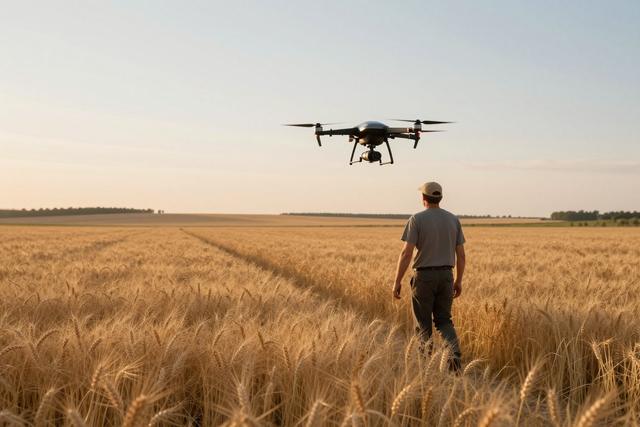
Zack Wiebe, a farmer operating near Morden, Manitoba, began using a drone to spray his fields this week, replacing the conventional aircraft he had relied on for years. The change was motivated by a desire to cut the expenses associated with aerial application, a cost factor that has long influenced farming decisions in the region.
For decades, growers in southern Manitoba have turned to planes and helicopters to disperse fertilizers and pesticides over large acreages. Those methods, while effective, involve fuel consumption, maintenance, and pilot fees that can add up quickly, especially for smaller operations. Wiebe’s decision reflects a growing awareness among local producers that emerging drone technology can perform the same tasks at a fraction of the price.
The drone Wiebe now employs can fly low over crops, delivering precise applications while consuming far less fuel than a traditional aircraft. By reducing the amount of chemical needed for each pass, the technology also promises a more efficient use of inputs. While the farmer did not disclose the exact savings, he noted that the lower operating costs were the primary factor in making the switch.
Industry observers note that Wiebe’s move is part of a broader trend in the province, where several farms have started experimenting with unmanned aerial systems for field work. The adoption of drones is being encouraged by the relative ease of operation and the decreasing price of the equipment, making it accessible to a wider range of agricultural businesses.
As more Manitoba growers explore this option, the shift could reshape how crop protection is managed across the southern part of the province. The transition from manned aircraft to drones may lead to a redefinition of standard practices, offering a cost‑effective alternative that aligns with both economic and environmental considerations.
Wiebe’s experience underscores the potential for technology to alter long‑standing agricultural methods, providing a tangible example of how innovation can directly impact farm budgets and operational choices.