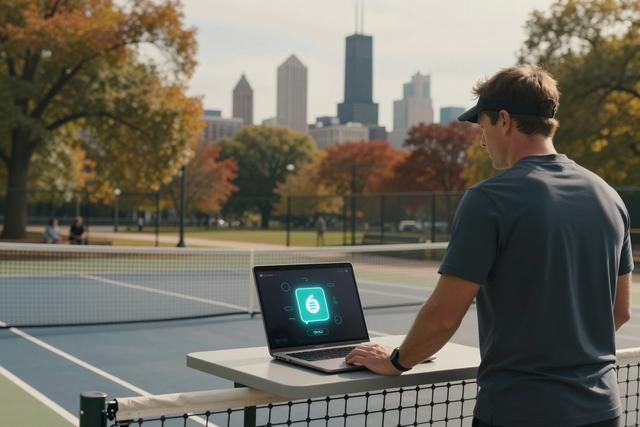
Chicago tennis instructor Chris Clark turned a pandemic‑era side gig into the racket‑sports company Toss and Spin. Operating from Lincoln Park’s Oz Park during the 2020‑2021 COVID‑19 shutdowns, the venture has already delivered more than 8,000 tennis lessons to local residents seeking outdoor activity while indoor courts were closed.
The rapid uptake of classes created a steady stream of customer contact. Clark now fields between 50 and 100 inquiries each day, covering everything from lesson scheduling and pricing to equipment recommendations and group session logistics. The demand reflected a citywide surge in interest for socially distanced sports as neighborhoods reopened. Managing that volume alongside coaching duties stretched his capacity and prompted a search for a more efficient solution.
To address the workload, Clark began evaluating artificial‑intelligence platforms that could automatically sort and respond to routine messages. An AI system would handle basic questions, confirm bookings, and route more complex requests to him, allowing the coach to focus on instruction and program growth without sacrificing response speed.
Clark’s effort mirrors a wider trend among Chicago’s small‑business community. After pandemic‑related disruptions forced many owners to redesign operations, a growing number of firms have turned to AI tools for customer service, inventory management and marketing automation. City economic development programs have highlighted AI adoption as a priority for post‑pandemic recovery, offering workshops and grants to help small firms implement the technology.
If the AI integration succeeds, Toss and Spin could maintain its high lesson volume while keeping reply times short, positioning the company for continued expansion as Chicago’s outdoor recreation market rebounds. Clark expects the technology to also collect data on client preferences, informing future class offerings and marketing strategies.