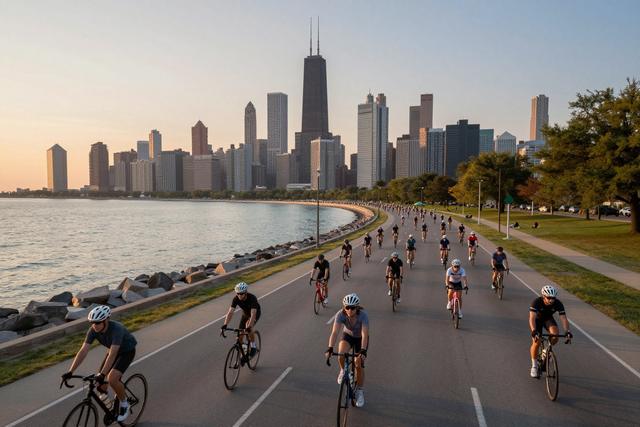
Thousands of cyclists took to Chicago’s DuSable Lake Shore Drive on September 6, 2026 for the 25th annual Bike the Drive, a legal 30‑mile ride that temporarily transforms the usually car‑only boulevard into a shared roadway. The event, held each year along the lakefront, opened the iconic stretch to riders for a single day, allowing participants to experience a continuous, traffic‑free route from the city’s north side to its south edge.
Organizers marked the milestone edition by highlighting the event’s role in showcasing how the city’s streets might be reimagined for greater safety. Participants said the ride demonstrates the potential for Chicago’s thoroughfares to accommodate walkers and cyclists more securely, offering a tangible example of a street design that prioritizes non‑motorized traffic.
The 30‑mile course traced the length of Lake Shore Drive, providing riders with panoramic views of Lake Michigan while they rode past parks, beaches, and the city skyline. The temporary closure required coordination with municipal authorities to ensure smooth operation, and the event proceeded without incident, underscoring the city’s ability to manage large‑scale, vehicle‑free gatherings on major infrastructure.
Bike the Drive has become a staple of Chicago’s outdoor calendar, drawing cyclists of varied skill levels who gather each year to celebrate the city’s commitment to active transportation. The 2026 edition reinforced that commitment, with the sheer volume of participants serving as a visual reminder of public demand for safer, more inclusive streets.
As the ride concluded, cyclists returned their bikes to designated parking areas, and Lake Shore Drive reopened to regular traffic. The event’s success adds momentum to ongoing discussions about permanent changes to the city’s road network, reinforcing the idea that large‑scale community events can influence long‑term urban planning.
The 25th Bike the Drive closed with thousands of riders having completed the 30‑mile journey, leaving a clear message that Chicago’s streets can evolve to better serve pedestrians and cyclists alike.